You walk through the door for the first time.
Something happens before you have named anything. Before you have checked the square footage, the number of rooms, the condition of the kitchen. The body responds. Sometimes it opens. Sometimes it quietly contracts.
That first feeling is not decoration. It is information.
A home is never just what you see when you walk in. It holds another version of itself — quieter, not yet visible, waiting to be read. It is a structure of possibilities. Learning to see them changes everything.
When I arrive at a prospective home, I do not begin with the space itself. I begin with you.
What do you want from this place? How do you want to live? What might change? Perhaps you are thinking of having a child. Perhaps your children will one day leave. Perhaps life will shift in ways you cannot fully anticipate — a separation, a new partnership, a different rhythm of work and rest. A home, if chosen well, can hold all of that.
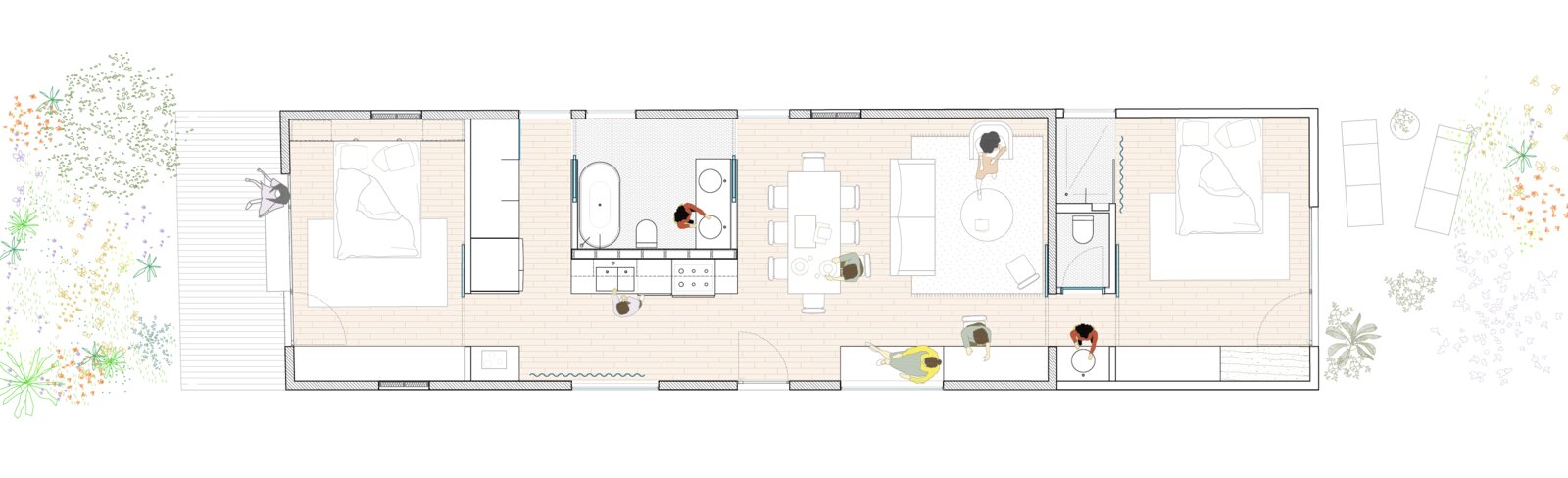
I look at whether the space can adapt. Could an area become independent, with its own access, allowing privacy or even future income? Could the house accommodate different ways of living within it, without losing coherence? Sometimes the potential is already there, just hidden.
I think often of the Schindler House in Los Angeles — a house designed to hold more than one life. After separating, the architect and his wife continued living there together, each inhabiting their own wing, their lives unfolding in parallel through two distinct patios and a careful spatial division. Close, but independent. Connected, but free.
A house can hold complexity — if it is understood that way.
Most of what defines a home is not immediately visible. It requires a trained eye to be seen.
Very often, it begins with natural light. Not simply whether a house is bright or dark, but how light moves through it — where it enters, how it travels, how it changes during the day. A space can have windows and still feel lifeless, or be small and feel expansive, simply because light is well directed. Light is not quantity — it is direction and orientation.
Years ago, in Japan, I visited a small house — the kind of precisely considered, constraint-driven work associated with practices like Atelier Bow-Wow. One window faced directly onto a neighboring wall, only a few feet away. I asked why. The answer was simple: the wall was white, and in the afternoon it reflected the sunlight back inside. We stayed longer for tea, and as the light shifted, the space transformed. Soft, indirect, precise. That moment stayed with me.
Light does not need space. It needs intelligence.
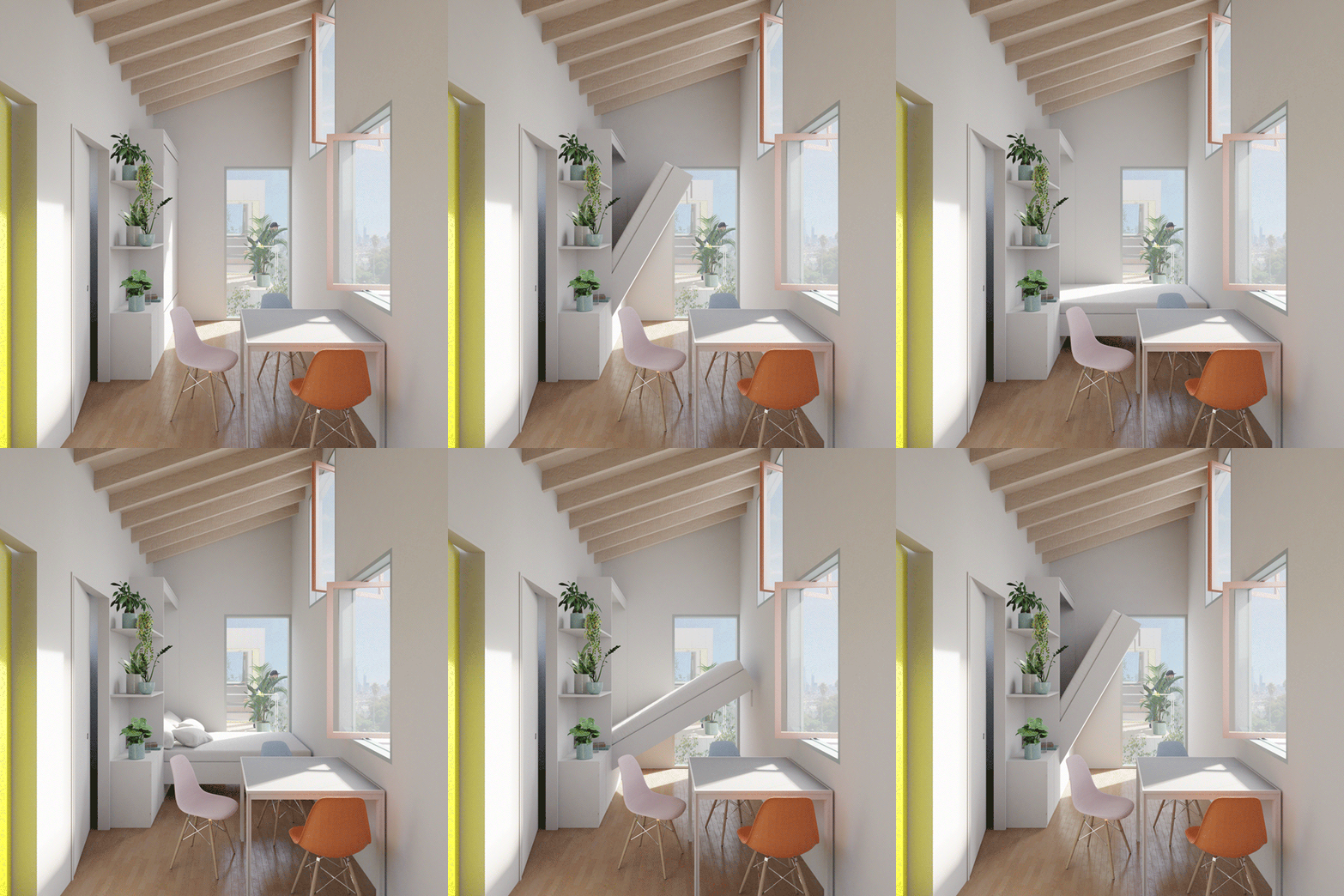
Then there is the question of construction quality. The thickness of walls. The way the building holds temperature, sound, and time. I remember visiting an apartment with a friend who was considering buying it. At first glance, it seemed fine. But the windows were poor, the walls thin. Heat would escape easily, and comfort would always be compromised — and those elements could not be changed due to building regulations. What appeared minor was, in fact, structural.
Structural decisions define how you live every day.
There is also the question of flow — how you move through the space, how air circulates, how one room relates to another. Sometimes a single door is enough. Sometimes removing a partition changes everything. The goal is not to add more, but to align the space with how you want to live.
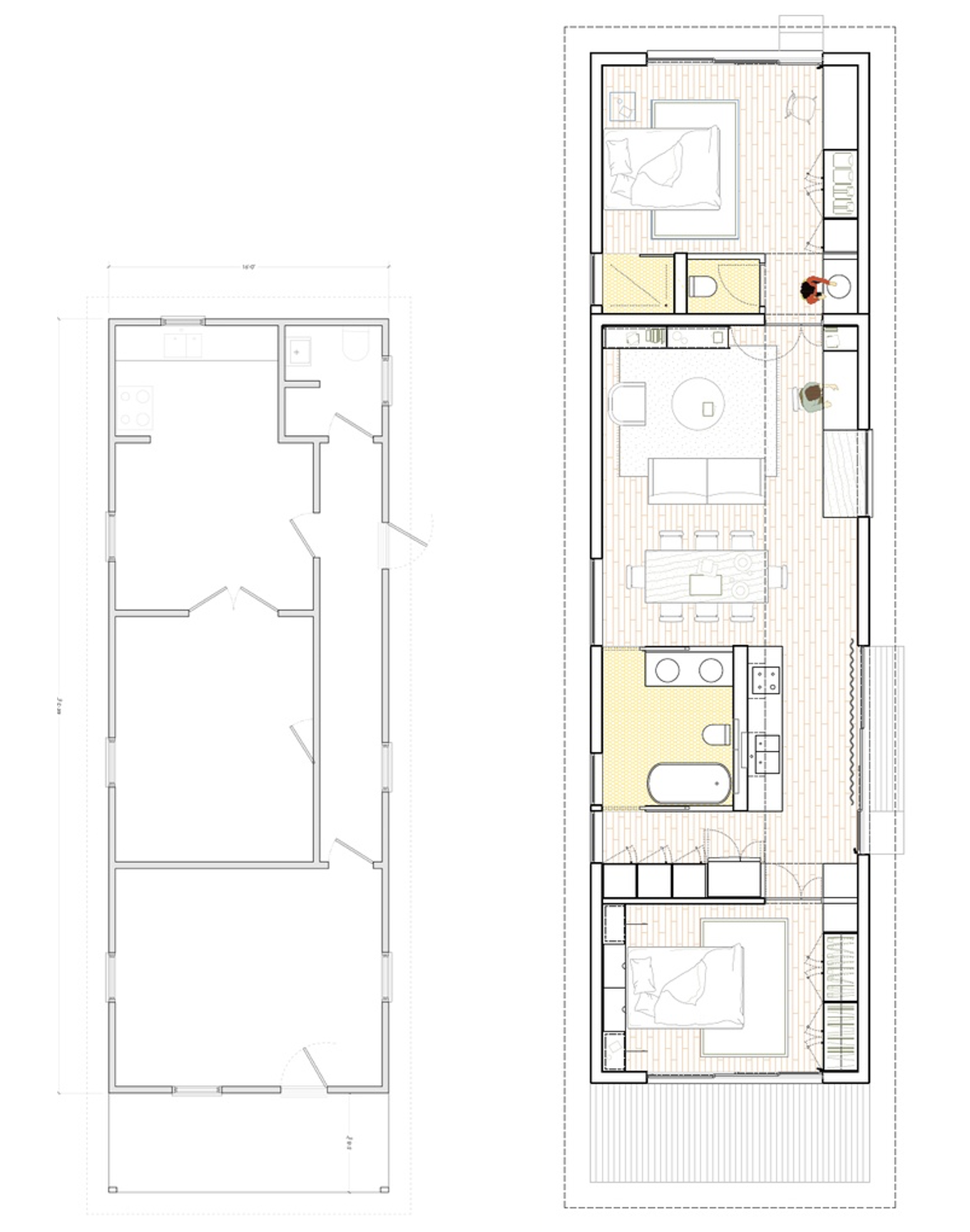
I often think of a project with a young couple, Fon and Jay. They found a tiny, narrow house, compressed between its neighbors, dark and constrained. Their first instinct was to expand it — to add an extra room, to create a studio at the back, even to open the possibility of an Airbnb. It made sense. But expanding would have taken away the garden, and the garden was essential.
So we explored both options. I drew the expansion so they could see it clearly, and then we chose not to expand, but to transform.
Instead, we worked within the existing footprint. What had felt narrow and dark became open and full of light. We introduced vertical windows, from floor to ceiling, carefully positioned to create diagonal views. When you enter, your eye travels outward. The house expands without growing.
They still call me to tell me how the light changes throughout the day, how the house feels larger than it is — and how happy they are living there now with their two daughters.
A house is not defined by its size, but by how it is understood.
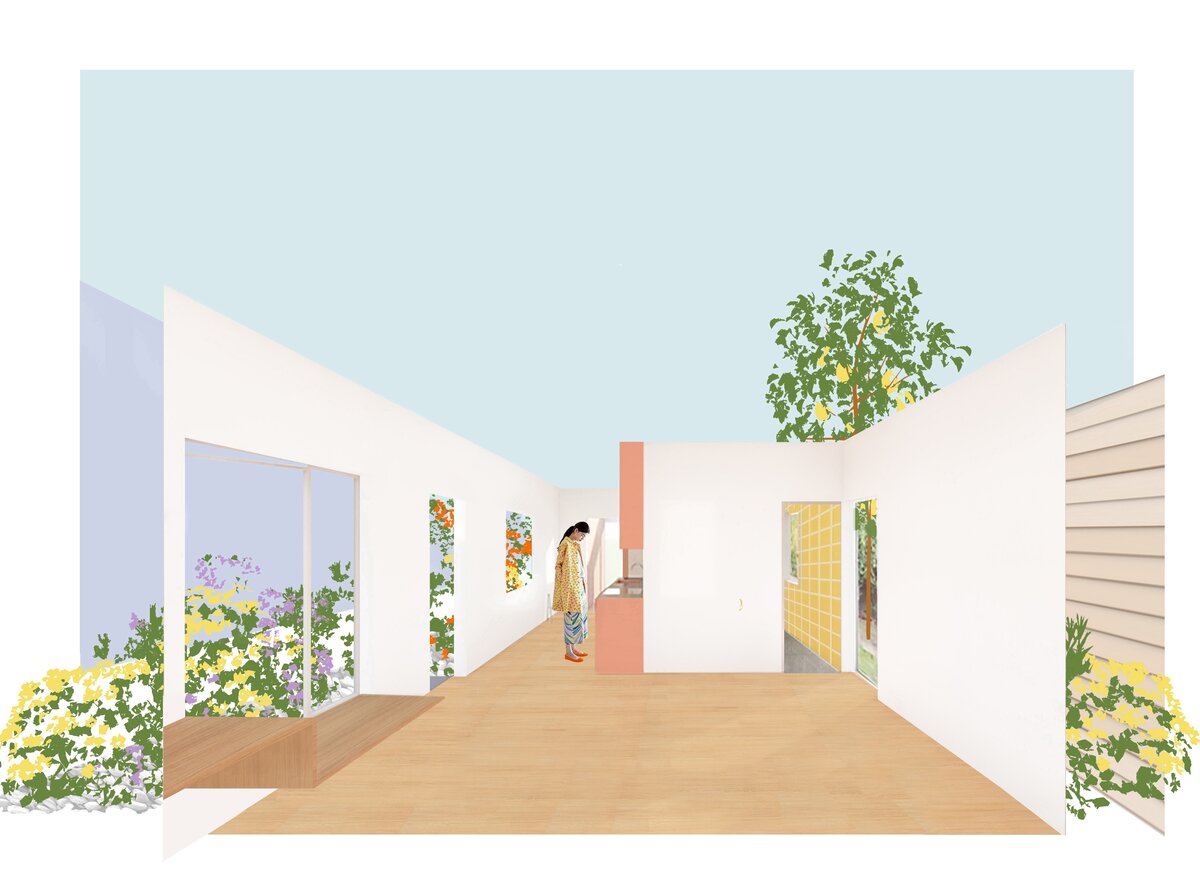
I also take into deep consideration the outside — the garden, the vegetation, the view, even a narrow alleyway. A home is never only interior. It is always in dialogue with its surroundings. The relationship between inside and outside, between architecture and nature, is not secondary. It is part of the spatial diagnosis.
Sometimes the transformation is not inside, but in how the outside is framed.
Choosing a home is not about what it is today. It is about whether it can support how you want to live.
Before you buy, I can show you what most people miss. This is what a Before You Sign consultation begins with.