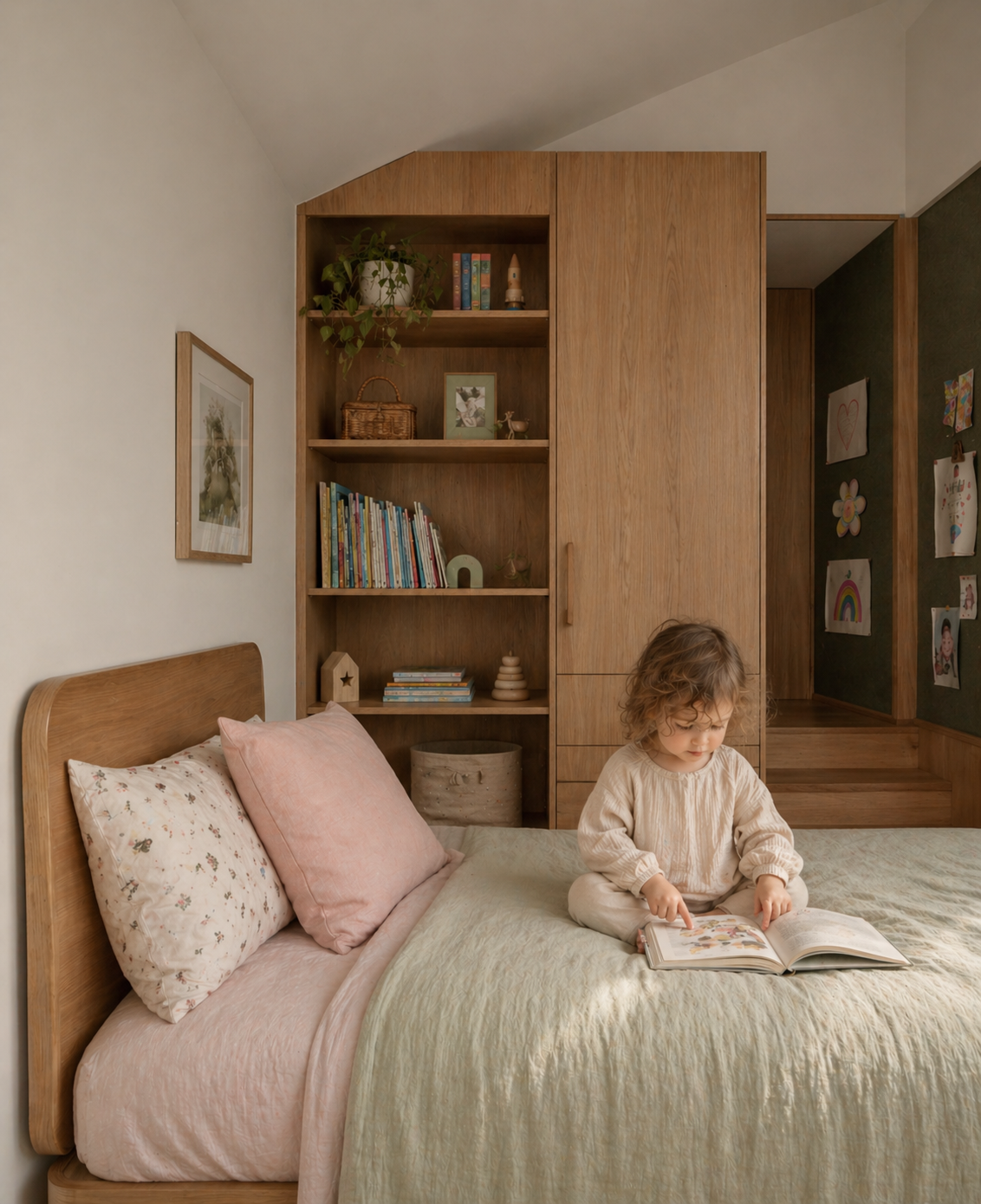
It is Sunday morning. The light comes in at an angle. You are still in bed, and without moving, without deciding anything, you feel that something is right. The room holds you. You breathe differently here.
Now think of another room. One where you never quite settle. Where you sit down and almost immediately want to stand up again. Where the light is flat, the surfaces are hard, the proportions slightly off. You leave earlier than you intended. You carry a low-level tension you cannot name.
You did not choose those feelings. They were designed into you — by the room.
If you have ever walked into your home and felt slightly off — without knowing exactly why — this is not accidental. It is design. Or the absence of it.
This is not a metaphor. The body responds to its spatial environment with the same directness that it responds to food, to temperature, to touch. What surrounds you — the quality of light, the scale of objects, the relationship between surfaces, the flow between one space and the next — is not background. It is a condition. And like any condition, it either supports your life or quietly works against it.
We have been taught to think of aesthetic decisions as a matter of taste. Something personal, optional, secondary to the real concerns of a home — square footage, storage, resale value. But this separation between the beautiful and the functional is a relatively recent and specifically Western idea. Socrates already understood that beauty is fitness for function — that what is truly well-designed for its purpose cannot help but be beautiful. Kenji Ekuan, the Japanese industrial designer who devoted a book to the aesthetics of the lunchbox, went further: beauty is function. For a culture that does not separate the utilitarian from the aesthetic, the question is never does it look good but does it work — on the body, on the spirit, on the life lived inside it.
Neuroarchitecture — the study of how built environments affect the brain and nervous system — has begun to give us the science to say what those traditions knew intuitively. Ceiling height changes the way you think. Natural light regulates cortisol. Visual clutter activates the same stress responses as physical threat. Proportion, harmony, and spatial flow are not decorative qualities — they are biological inputs.
What this means, practically, is that every decision you make about your home — every object, every surface, every source of light, every threshold between one room and the next — is a health decision. Not in the way we speak about air quality or ergonomic chairs. In a deeper way: the quality of your daily experience, your capacity for rest, your ability to think, create, and recover — all of it is shaped by the aesthetic conditions you live inside.
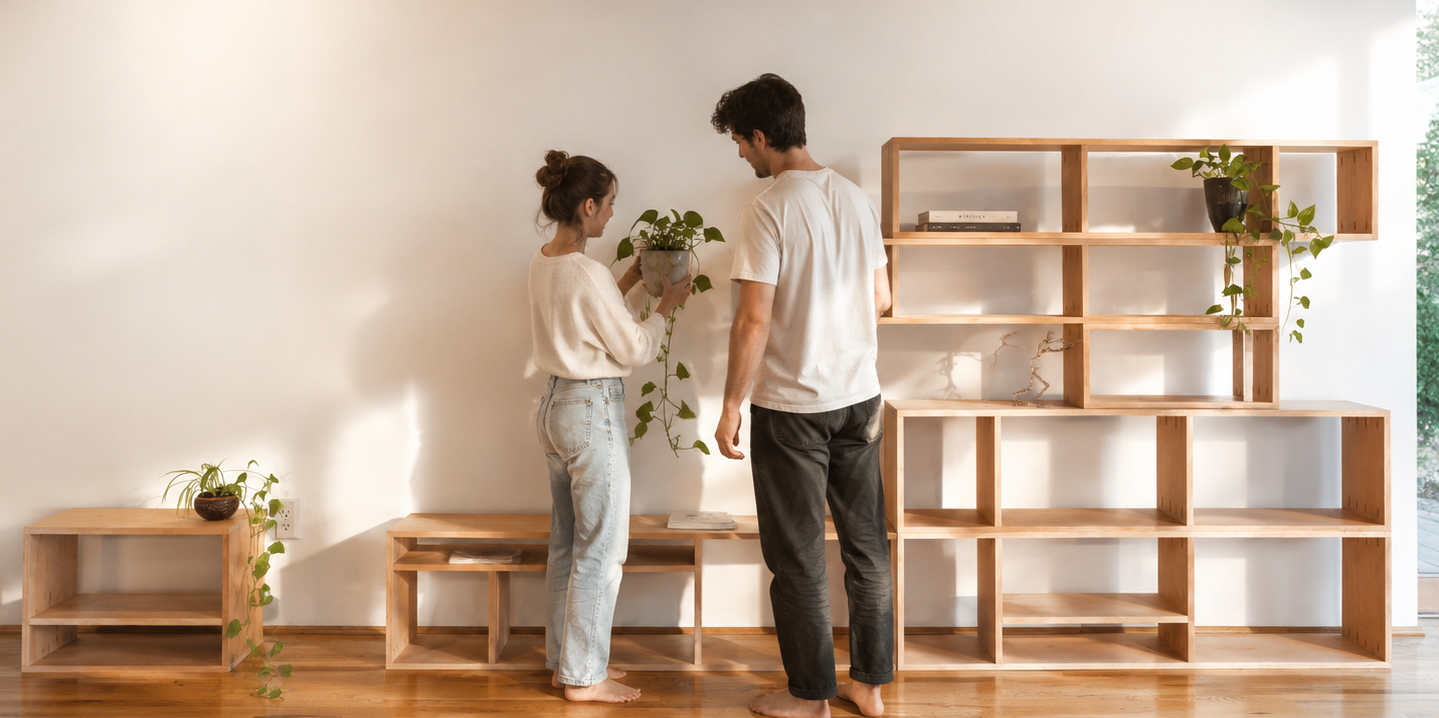
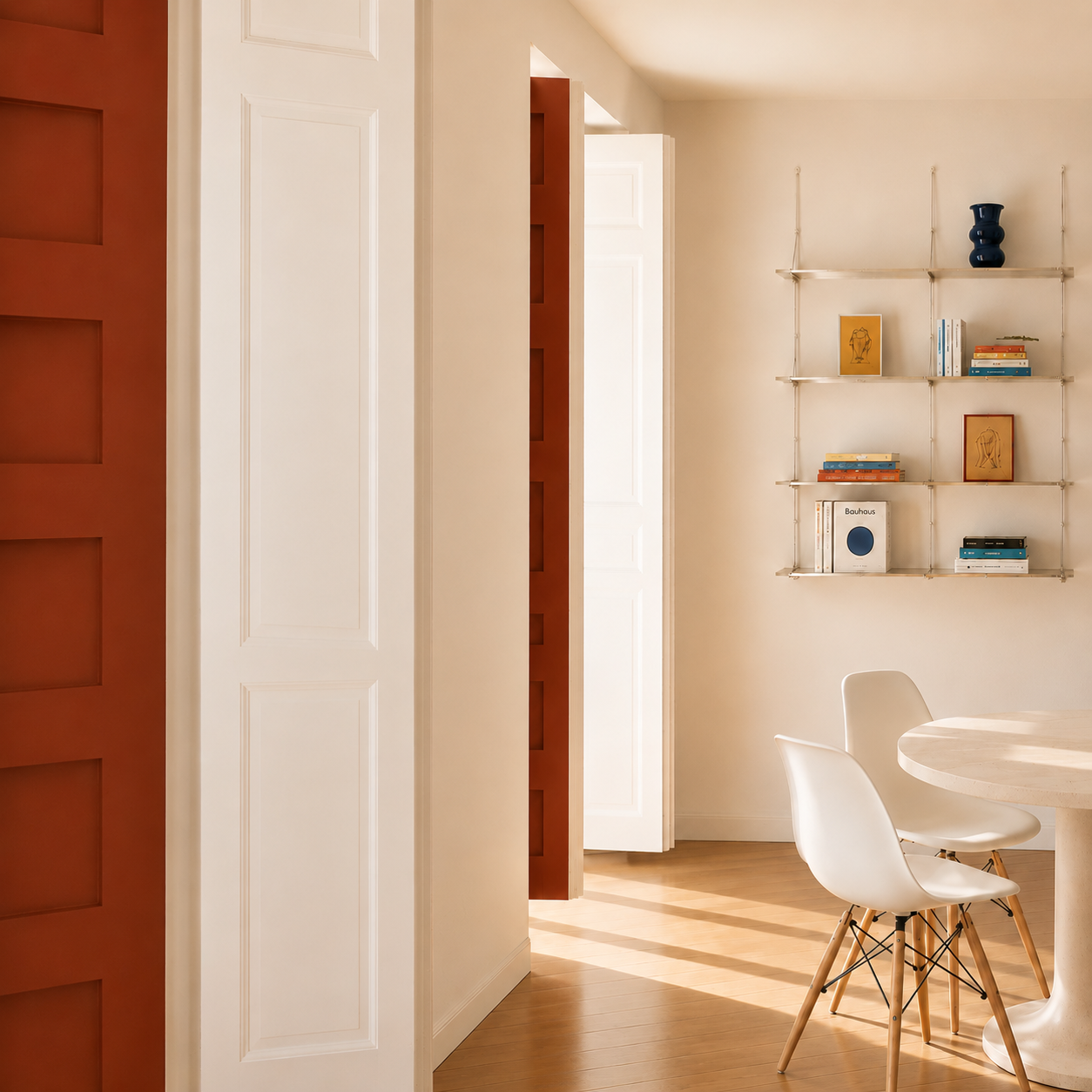
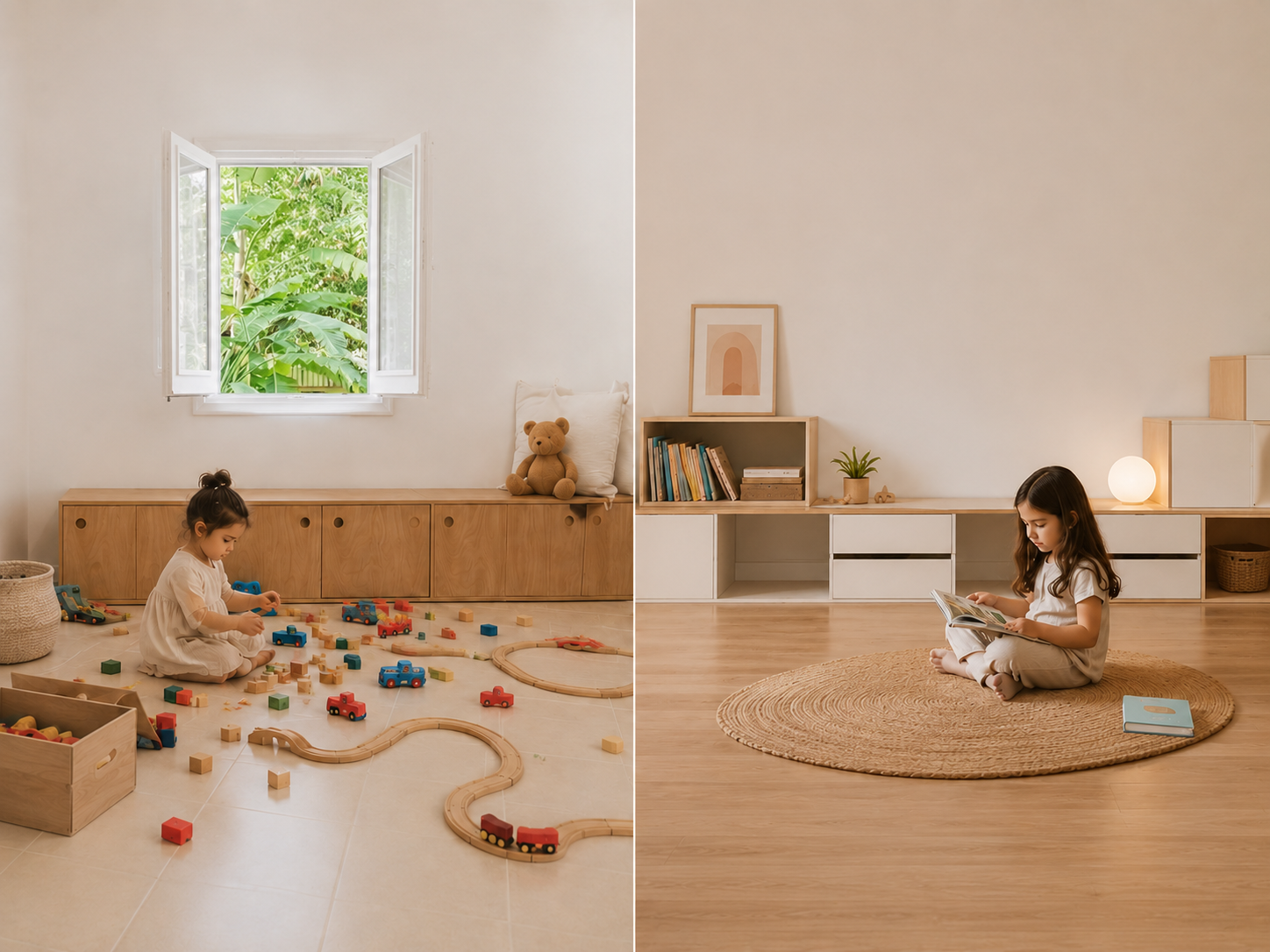
There is a kind of decision in design that never gets credited because it leaves no visible trace. The empty corner that was not filled. The shelf that holds three objects instead of twelve. The surface that was chosen because it does not accumulate, does not demand, does not age badly. These are not absences. They are decisions. And the body feels them — as ease, as breath, as a room that does not ask anything of you.
We have been trained to add. More storage, more surfaces, more objects that signal taste or aspiration. But the most powerful spatial decisions are often subtractive. The Japanese concept of ma — the meaningful pause between things — understands empty space not as lack but as presence. A room breathes through what is not there. In Japan, the smallest gift is the most precious. Restraint is not absence — it is a form of respect for what remains.
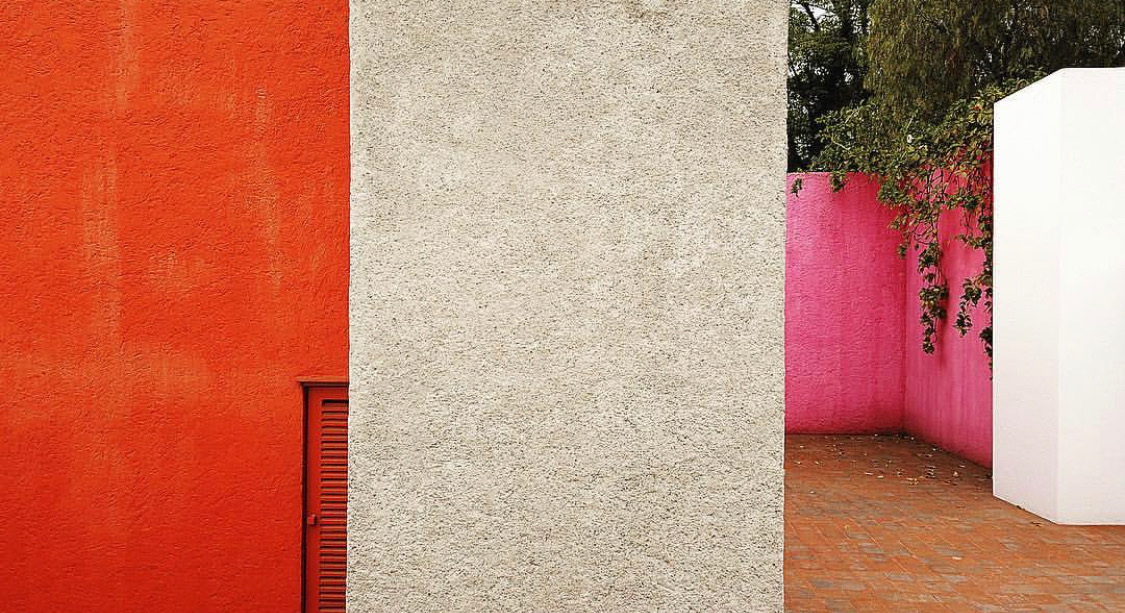
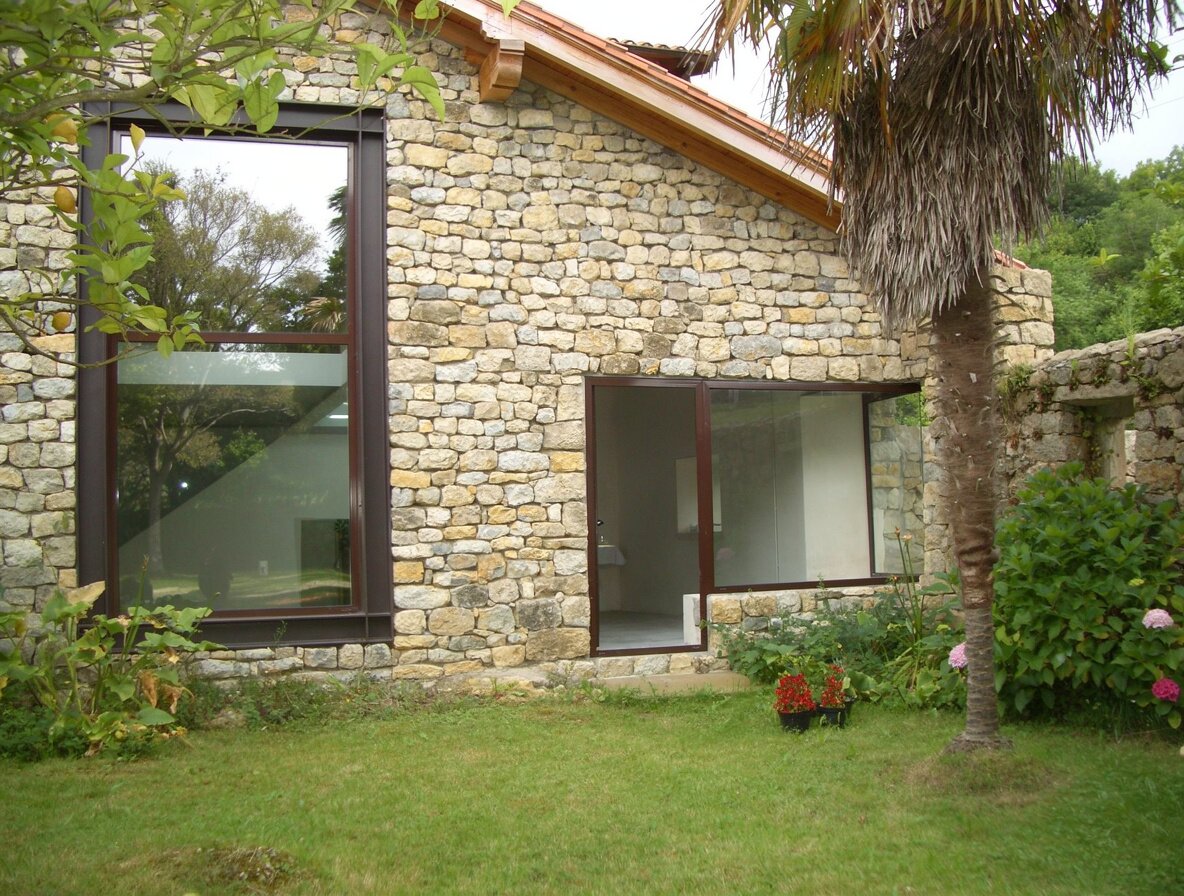
The same logic applies to materials. A wall finish that collects dust is not a neutral choice — it is a slow accumulation of visual noise, of maintenance, of low-grade obligation. A material that ages well, that develops rather than deteriorates, that responds to light differently at different hours — this is a material working for you. Most people have never been taught to think about materials this way. They choose by color, by trend, by what they saw in a photograph. But materials are not images. They are surfaces you touch, that you breathe near, that you live against for years.
Small objects carry more weight than large ones. A lamp at the wrong height. A handle that does not fit the hand. A table whose edge is too sharp, whose height forces the shoulders to rise almost imperceptibly. These micro-conditions compound. Lived daily, they become the ambient quality of your life at home — the difference between a space that restores you and one that slowly depletes you.
None of this requires a renovation. It requires a different kind of attention — one that starts not with aesthetics as appearance, but with aesthetics as sensation. What does this room ask of my body? What does it give back?
This becomes especially clear in moments of change — when you move into a new home, when a child arrives, when a relationship ends, when your work shifts, when the life you are living no longer fits the space that was designed for a different version of you. These are the moments when the mismatch becomes impossible to ignore. And they are also the moments when a different kind of spatial thinking becomes possible.
I came to understand space through three very different teachers.
Japan taught me that the smallest gift is the most precious — that restraint is not absence but a form of respect for what remains. That emptiness is not nothing. That a single well-placed object can hold a room the way a word holds a sentence.
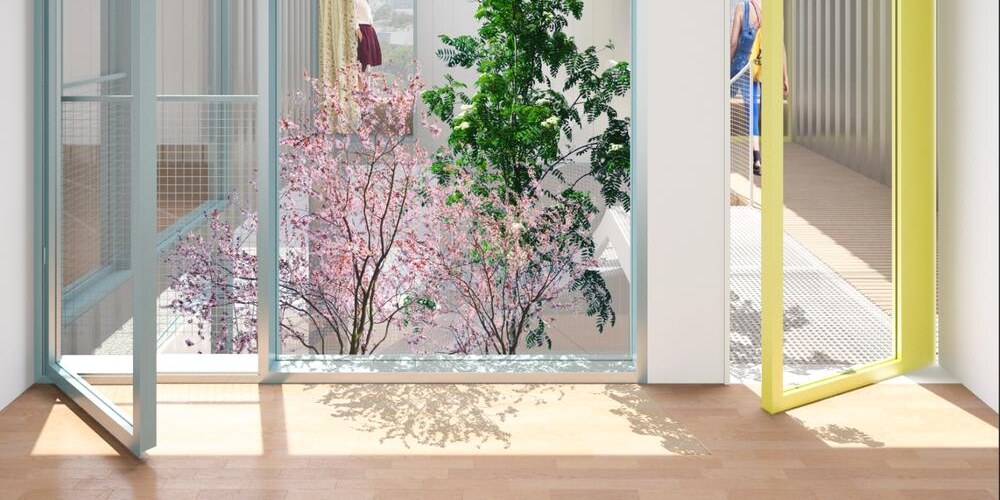
Arab architecture, which I absorbed in Spain, taught me that space is not only seen but heard and smelled. The sound of water in a courtyard. The air that enters through a lattice carrying something alive. The diagonal view — never the direct axis, always the oblique — that makes a room feel larger than it is, and more mysterious. Space there is designed for all the senses simultaneously. The body is not a pair of eyes moving through a floor plan. It is a full organism, receiving.
From Koolhaas I learned that architecture is theater — that a staircase can be designed to make you want to linger, that a library can be a place to fall in love, that the architect holds a quiet power over how people meet, how they feel while waiting, how they move toward or away from each other. I once designed a library where the spatial sequence was conceived to create encounters — moments of pause, of diagonal view, of unexpected proximity. Architecture can cultivate better relationships. It can make a hospital waiting room feel less like a sentence. It can make a home feel like the best version of the life lived inside it.
None of that power disappears at the front door of a private home. If anything, it concentrates.
The home is where the body spends most of its time. It is where you recover, where you think, where you love, where you age. And yet most homes are designed — if they are designed at all — around floor plans, budgets, and trends. The sensory life of the space is left to chance.
It does not have to be.
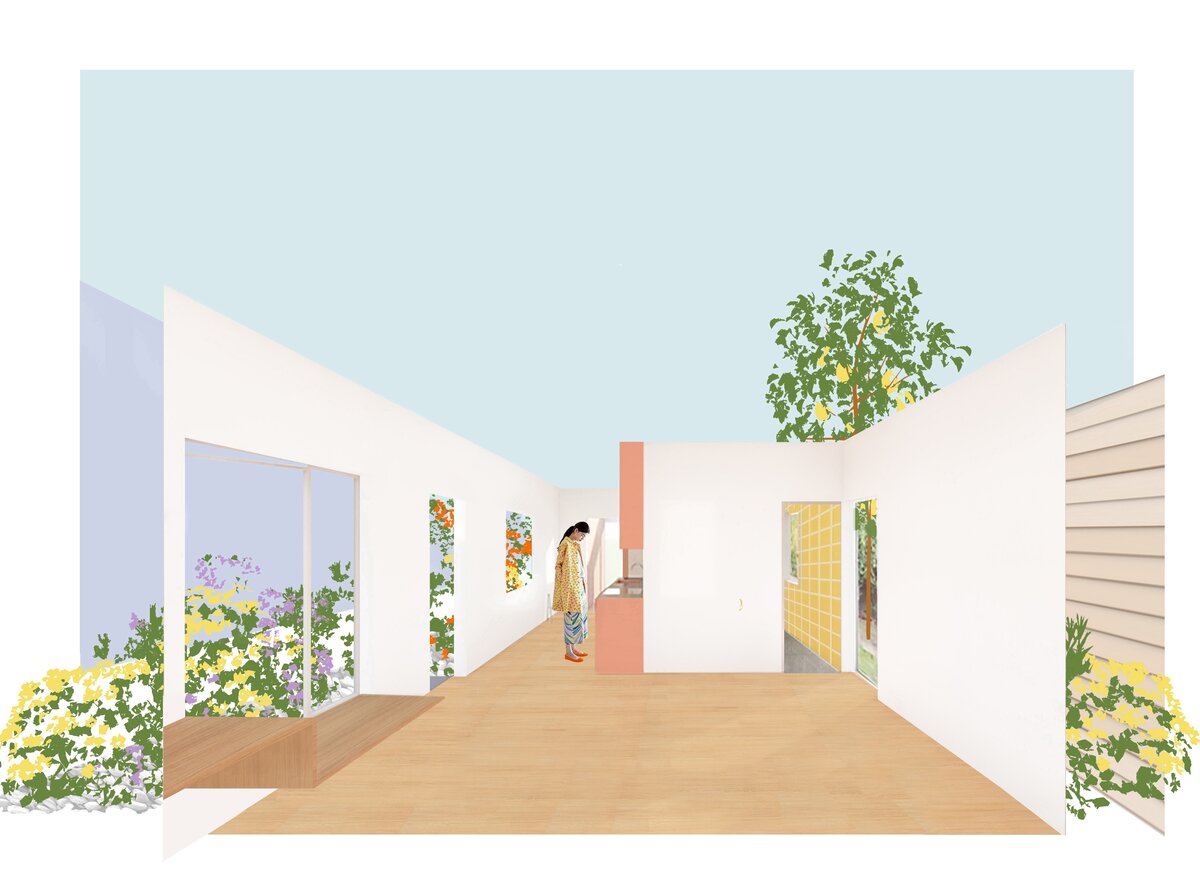
The quality of light in the morning. The texture of the surface your hand rests on while you read. The flow between the kitchen and the place where the family gathers. The object on the shelf that every time you pass it, for reasons you cannot explain, makes you feel slightly more like yourself. These are not small things. They are the accumulated architecture of a daily life. And they can be shaped — deliberately, precisely, with the knowledge of what the body needs and how space can provide it.
But there is something beyond health, beyond the nervous system, beyond the science. The deeper argument is simpler and more radical: the only real measure of a home is whether it brings you joy.
Not comfort. Not order. Joy — the kind that gets into your hormones, your emotions, your cells. The relationship between what you see and touch and breathe and the way your body responds is not abstract. A space that inspires you makes you want to move, to dance, to stretch, to create, to take care of yourself. A space that is clean in the truest sense — not sterile, but free of unnecessary weight — gives you back your time. And time is where life actually happens.
This is what I design for. Not beautiful rooms in photographs. Rooms that make you feel something when you walk in alone on a Tuesday morning. Rooms that make you want to stay inside your own life.
Pleasure and health are not separate destinations. In a home that works, they are the same thing.