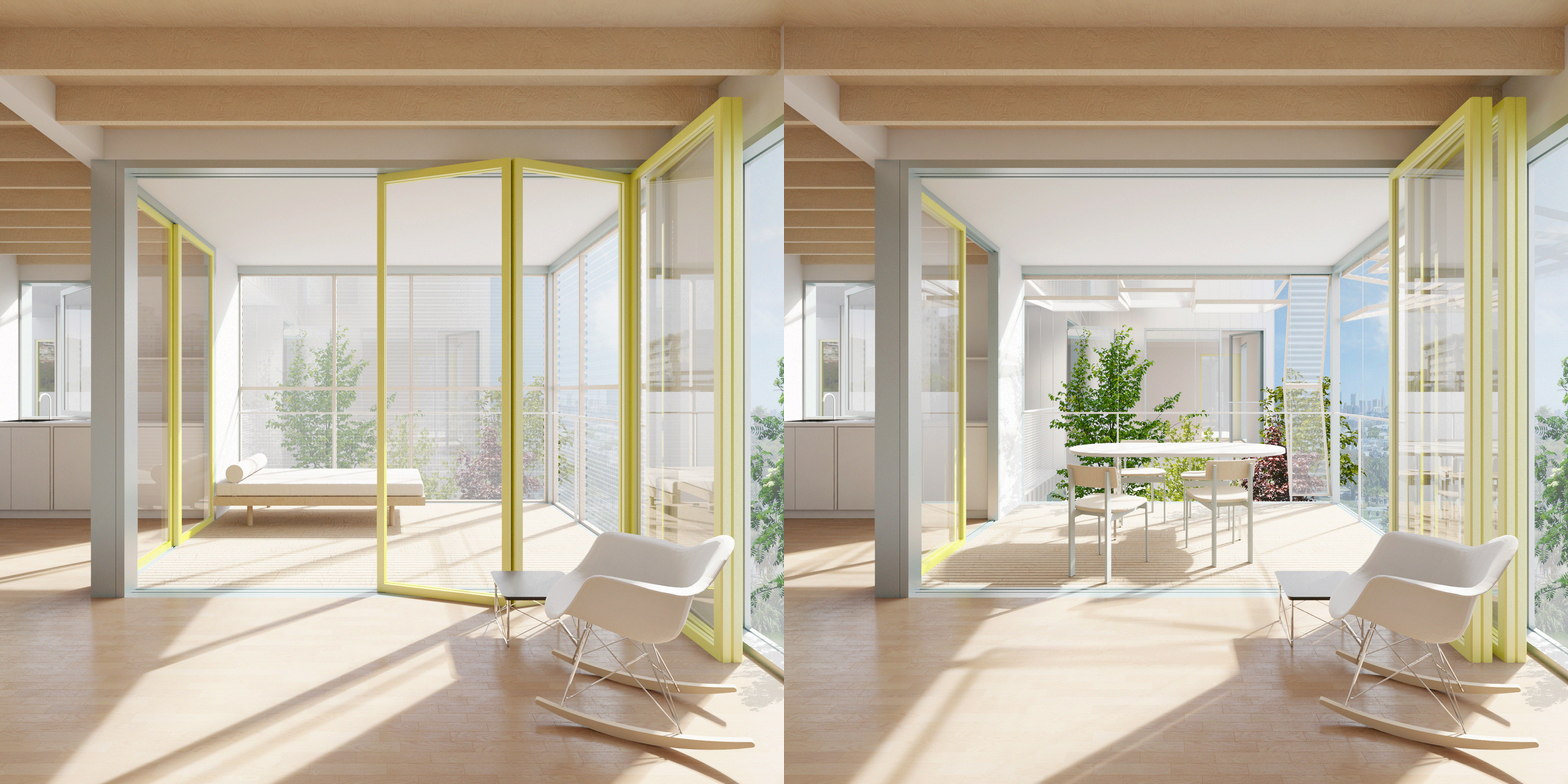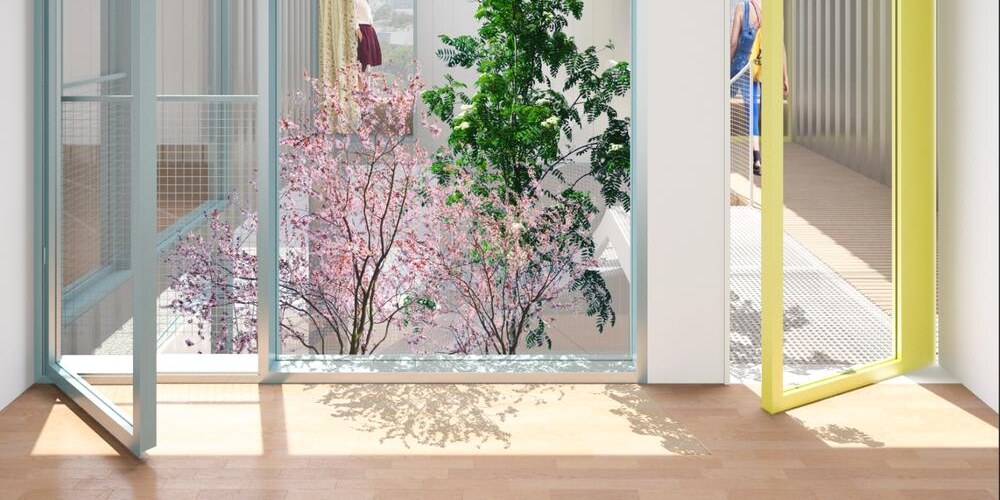
It is Sunday morning. The light comes in at an angle. You are still in bed, and without moving, without deciding anything, you feel that something is right. The room holds you. You breathe differently here.
Now think of another room. One where you never quite settle. Where you sit down and almost immediately want to stand up again. Where the light is flat, the surfaces are hard, the proportions slightly off. You leave earlier than you intended. You carry a low-level tension you cannot name.
You did not choose those feelings. They were designed into you — by the space.
What we experience first is not form, but atmosphere — the immediate way a place is felt before we have named anything about it.
The body responds to its spatial environment with the same directness that it responds to food, to temperature, to touch. What surrounds you — the quality of light, the scale of objects, the relationship between surfaces, the flow between one space and the next — is not background. It is a condition that either supports your life or quietly works against it.
We have been taught to think of aesthetic decisions as a matter of taste. Something personal, optional, secondary to the real concerns of a home — square footage, storage, resale value. But this separation between the beautiful and the functional is a relatively recent and specifically Western idea. Socrates already understood that beauty is fitness for function — that what is truly well-designed for its purpose cannot help but be beautiful. Kenji Ekuan, the Japanese industrial designer who devoted a book to the aesthetics of the lunchbox, went further: beauty is function. For a culture that does not separate the utilitarian from the aesthetic, the question is never does it look good but does it work — on the body, on the spirit, on the life lived inside it.
What we often call comfort, beauty, or pleasure is not separate from health — it is how health is felt.
Neuroarchitecture — the study of how built environments affect the brain and nervous system — has begun to give us the science to say what we knew intuitively. We no longer understand perception as something that happens only in the mind. It is a full-body process. Ceiling height changes the way you think. Natural light regulates cortisol. Visual clutter activates the same stress responses as physical threat. Light, sound, and spatial conditions directly affect stress levels, attention, and emotional safety. Proportion, harmony, and spatial flow are not decorative qualities — they are biological inputs.
What this means, practically, is that every decision you make about your home — every object, every surface, every source of light, every threshold between one room and the next — is a health decision. Not in the way we speak about air quality or ergonomic chairs. In a deeper way: the quality of your daily experience, your capacity for rest, your ability to think, create, and recover — all of it is shaped by the aesthetic conditions in which you live.
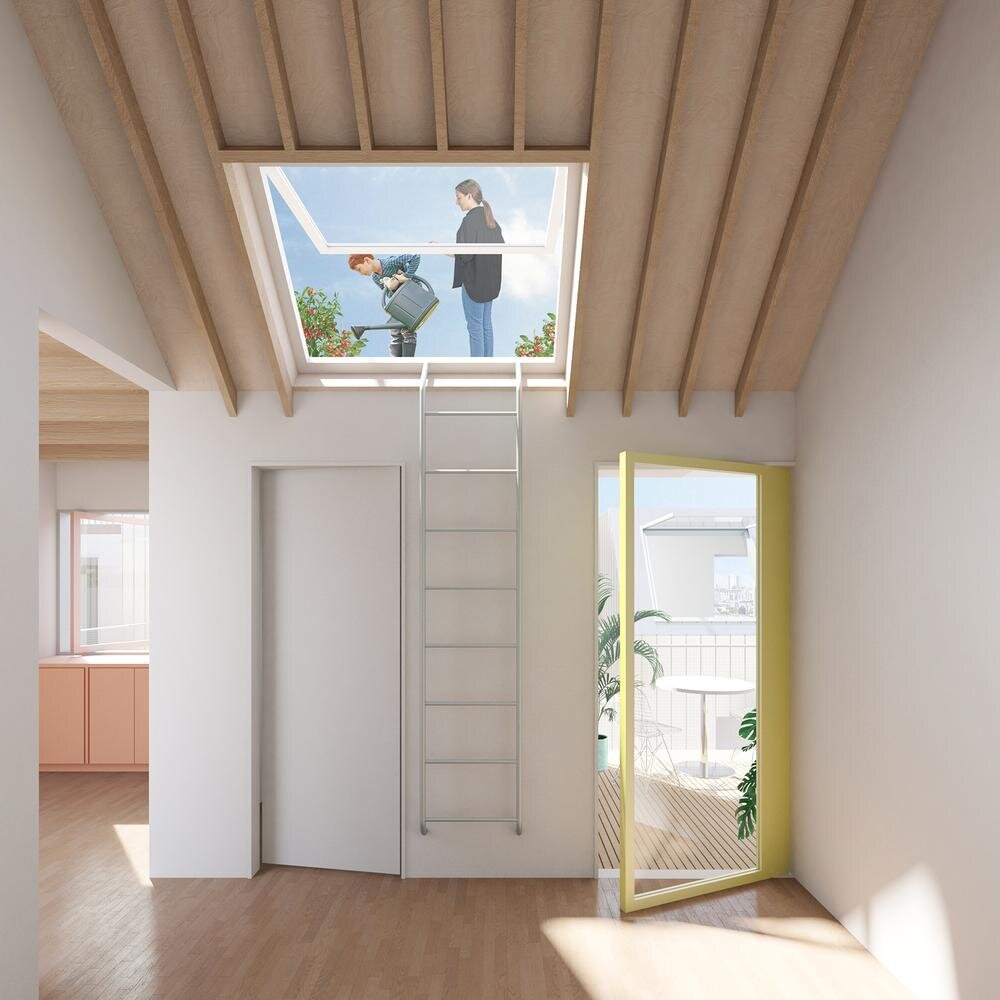
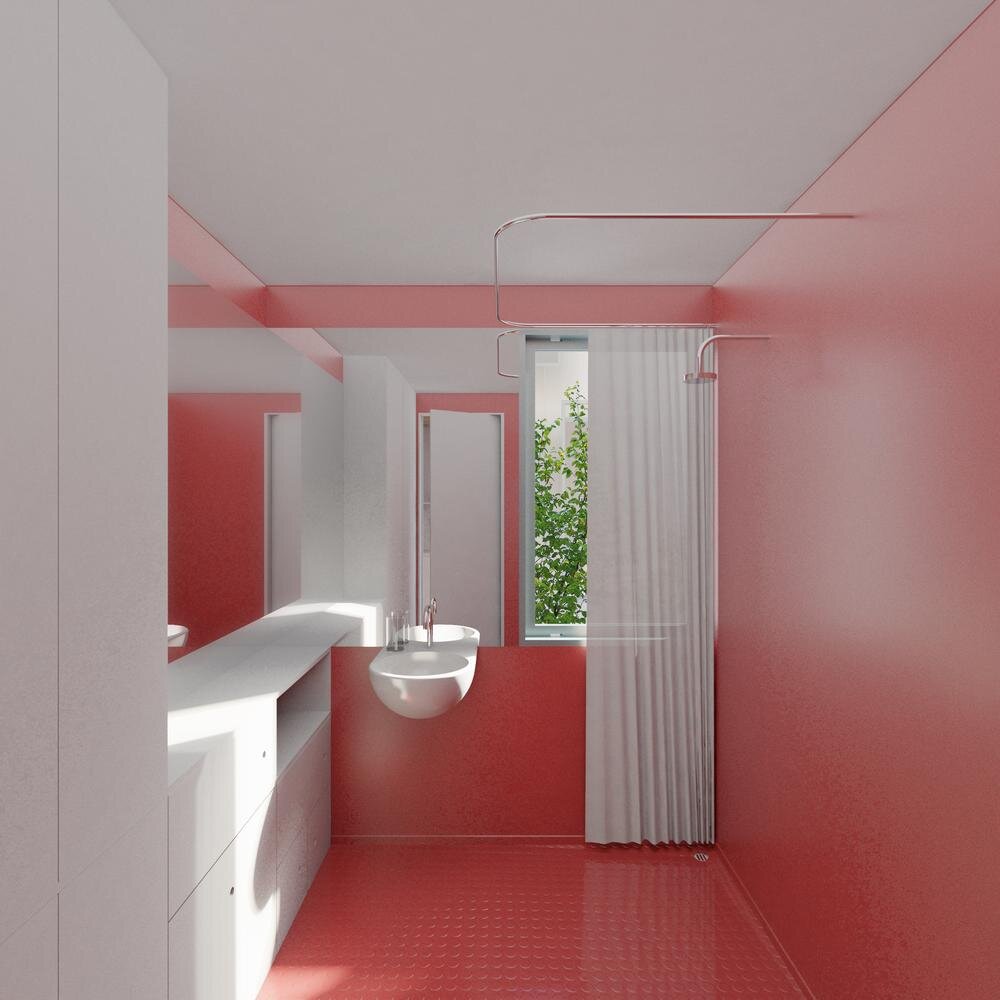
A space can be practically functional and still feel wrong — too exposed, too bright, too loud. What we experience in those moments is not preference, but a lack of emotional safety. It is often small conditions — a glare, a sound, a sudden change in light — that keep the body in a state of subtle tension.
The same logic applies to materials. A wall finish that collects dust is not a neutral choice. It is a slow accumulation of visual noise, of maintenance, of low-grade obligation. A material that ages well, that develops rather than deteriorates, that responds to light differently throughout the day — this is a material working for you. Most people have never been taught to think about materials this way. They choose by color, by trend, by what they saw in a photograph. But materials are not images. They are surfaces you touch, that you breathe near, that you live against for years.
Objects carry more weight than we imagine. A lamp at the wrong height. A handle that does not fit the hand. A table whose edge is too sharp, whose height forces the shoulders to rise almost imperceptibly. These micro-conditions accumulate. Lived daily, they become the ambient quality of your life at home — the difference between a space that restores you and one that slowly depletes you.
This becomes especially clear at certain moments — when you are about to buy a home, when your life changes, or when something in your space simply stops working.
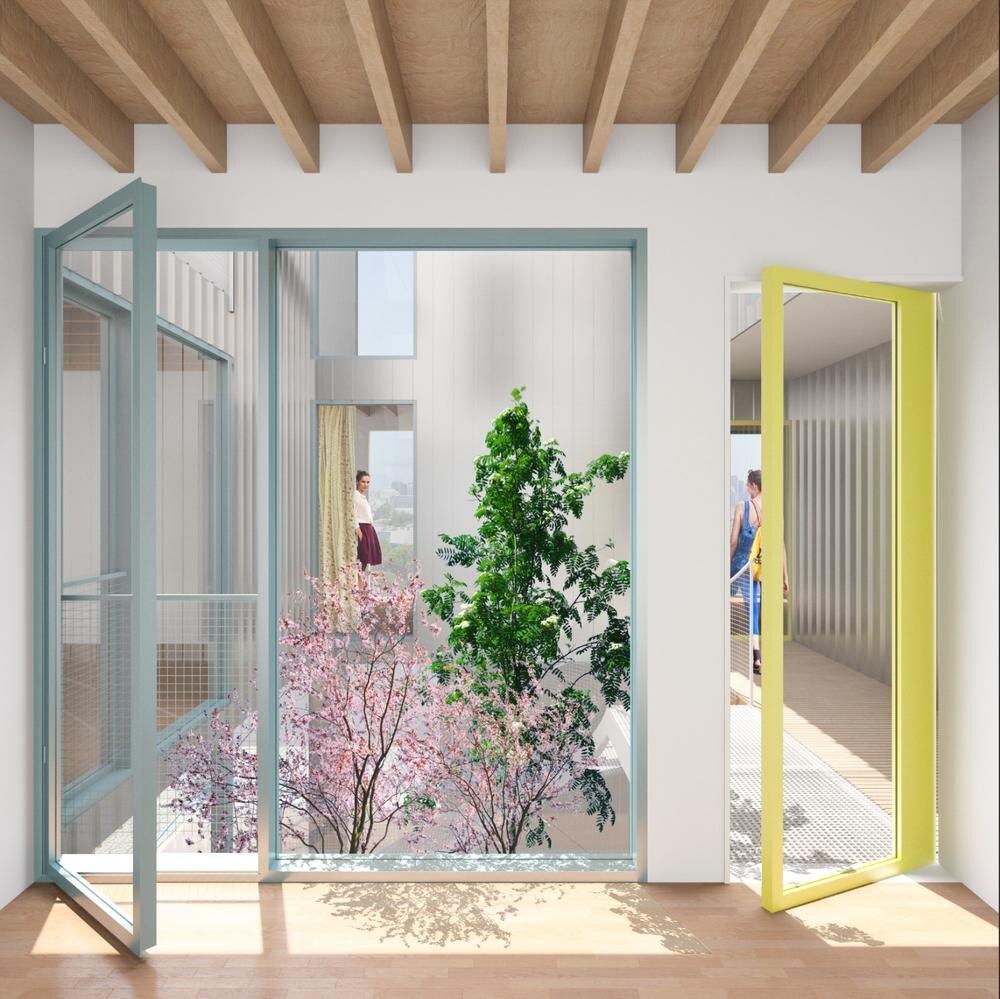
I came to understand space through different contexts.
Japan taught me that simplicity is not minimalism, but precision — and precision implies multifunctionality. How a small space can feel expansive through proportion, light, and an adept play with materiality. A well-designed space does not feel small. It feels free.
Spanish architecture, shaped by Arab influence, taught me that space is not only seen but heard and smelled and felt. The sound of water in a courtyard. The diagonal view — never the direct axis — that makes a room feel larger and more mysterious. The body is a full organism, receiving.
From Koolhaas I understood that architecture is not neutral. A threshold can change how people meet, how long they stay, how they move toward or away from each other. The house is not only a place to live — it is a stage for life to unfold.
Space shapes the quality of our relationships. How we gather, how we retreat, how close we sit, how easily we find each other at the end of a day. A well-designed home does not only support the individual — it shapes the life shared inside it.
Research in neuroscience confirmed what these contexts had shown me through experience: the body does not separate what it sees from what it feels. Space is not background — it is a biological condition.
The home is where the body spends most of its time. And yet most homes are designed — if they are designed at all — around floor plans, budgets, and trends. The sensory life of the space is left to chance.
It does not have to be.
This matters especially as we age. A home that is designed for one version of life becomes a constraint when life changes. The spaces that serve us best are those that adapt — that hold us through different chapters, different bodies, different needs. Design for longevity is not about making homes for the elderly. It is about making homes that are generous enough to grow with you.
The quality of light in the morning. The texture of the surface your hand rests on while you read. The flow between the kitchen and the place where the family gathers. The object on the shelf that every time you pass it, for reasons you cannot explain, makes you feel slightly more like yourself. Even small encounters with nature — a plant, filtered light, a shadow moving across a wall — can reset the body. These are not small things. They are the accumulated architecture of a daily life. And they can be shaped — deliberately, precisely, with the knowledge of what the body needs and how space can provide it.
To design a space is, ultimately, an act of care.
But there is something beyond health, beyond the nervous system, beyond the science. The deeper argument is simpler and more radical: the only real measure of a home is whether it brings you joy. The relationship between what you see and touch and breathe and the way your body responds is not abstract. A space that inspires you makes you want to move, to dance, to stretch, to create, to take care of yourself. A space that is clean in the truest sense — not sterile, but free of unnecessary weight — gives you back your time. And time is where life actually happens.
Pleasure and health are not separate destinations. In a home that works, they are the same thing.